Booking choice: The Akaroa Dolphins cruise, from $81 per person. Check dates Compare the options below
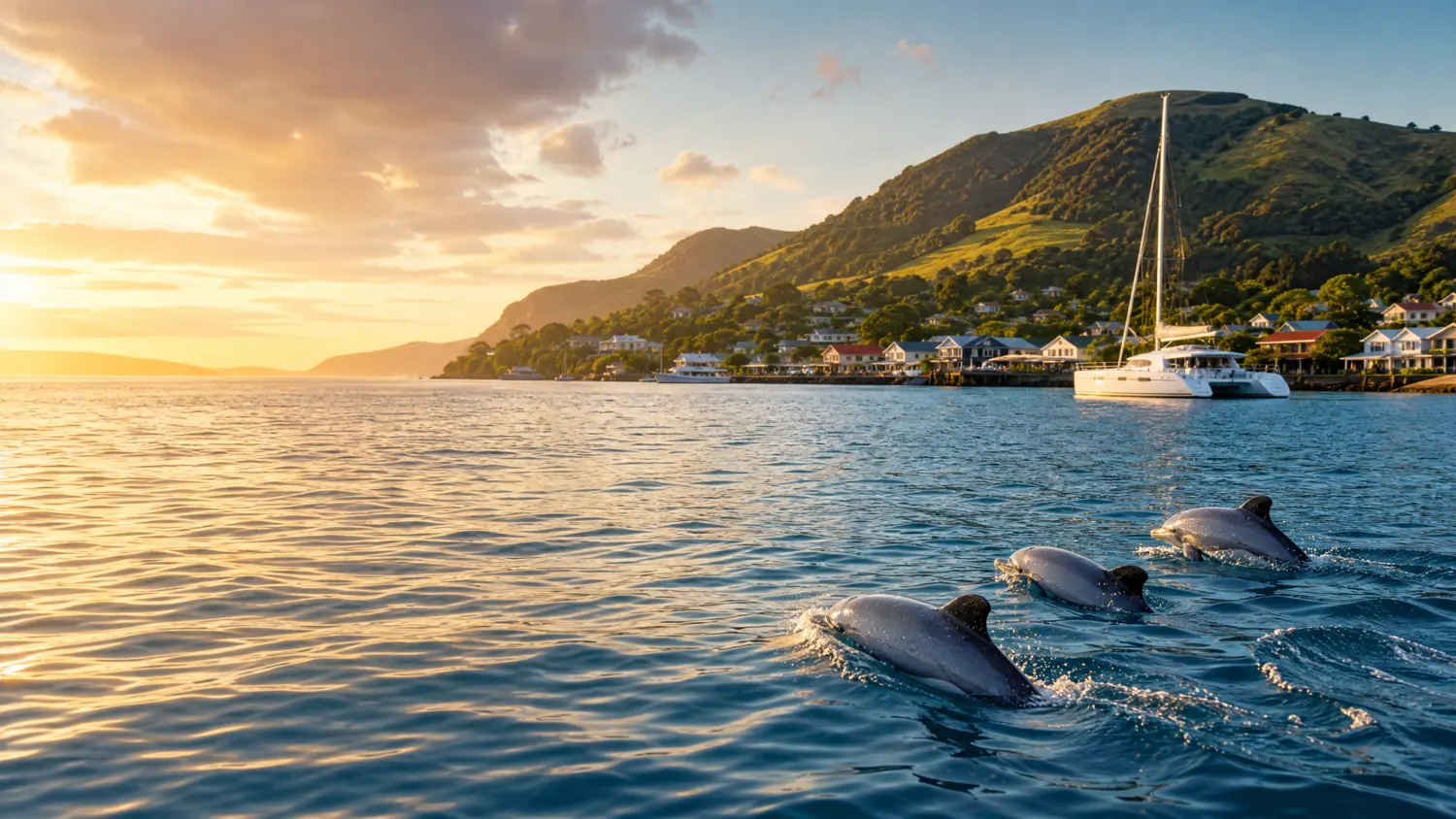
Most people who book a cruise in Akaroa come for one animal. Hector's dolphins are short, stocky and fast, and they often ride beside the boats for minutes at a time.
Here is how to tell them apart from other dolphins, how many are left, how the harbour protects them, and how to watch them well.
The quick answer
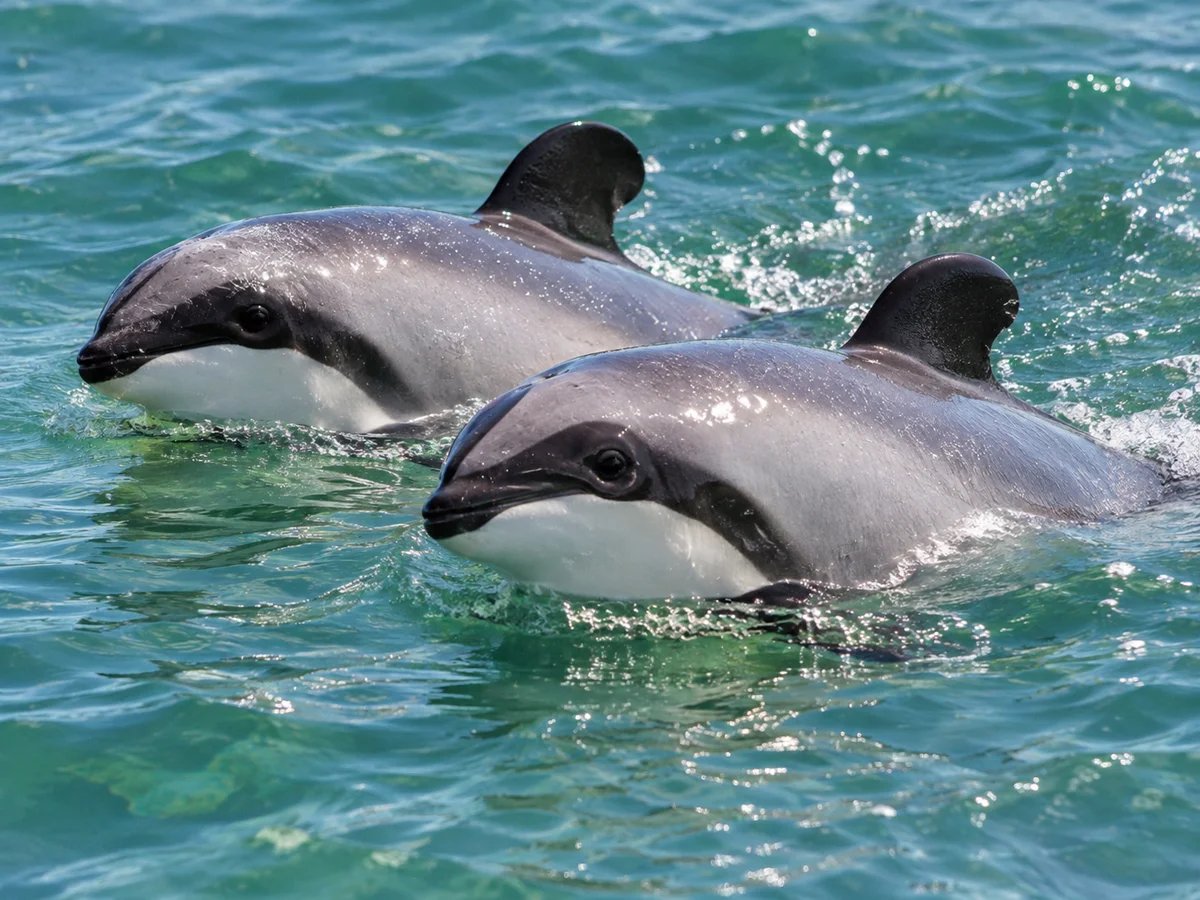
Hector's dolphins are found only in New Zealand. DOC calls them one of the world's smallest dolphins: adults are about 1.5 metres long, grey with black and white markings and a rounded black dorsal fin. About 15,000 are left, and the species is Nationally Vulnerable. Akaroa sits inside New Zealand's first marine mammal sanctuary, created in 1988.
What is a Hector's dolphin?
A small coastal dolphin found only in New Zealand, mostly around the South Island, and classed as Threatened, Nationally Vulnerable.
The DOC species page lists the threats: fishing, toxoplasmosis and other diseases, boat strikes, mining, oil and gas exploration, noise and tourism. Māui dolphins, off the North Island's west coast, look the same and are a subspecies of Hector's.
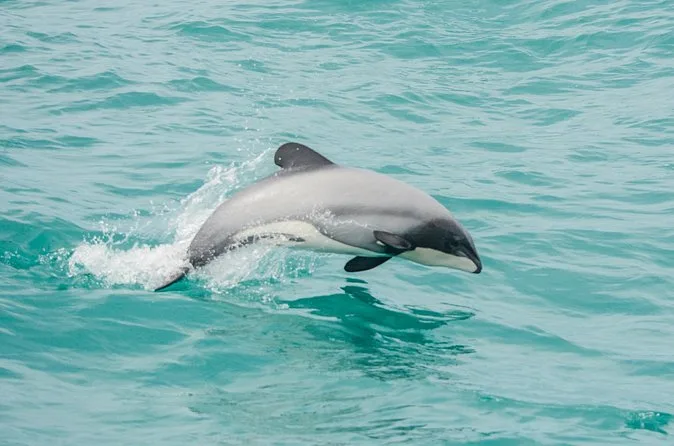
How do you recognise a Hector's dolphin?
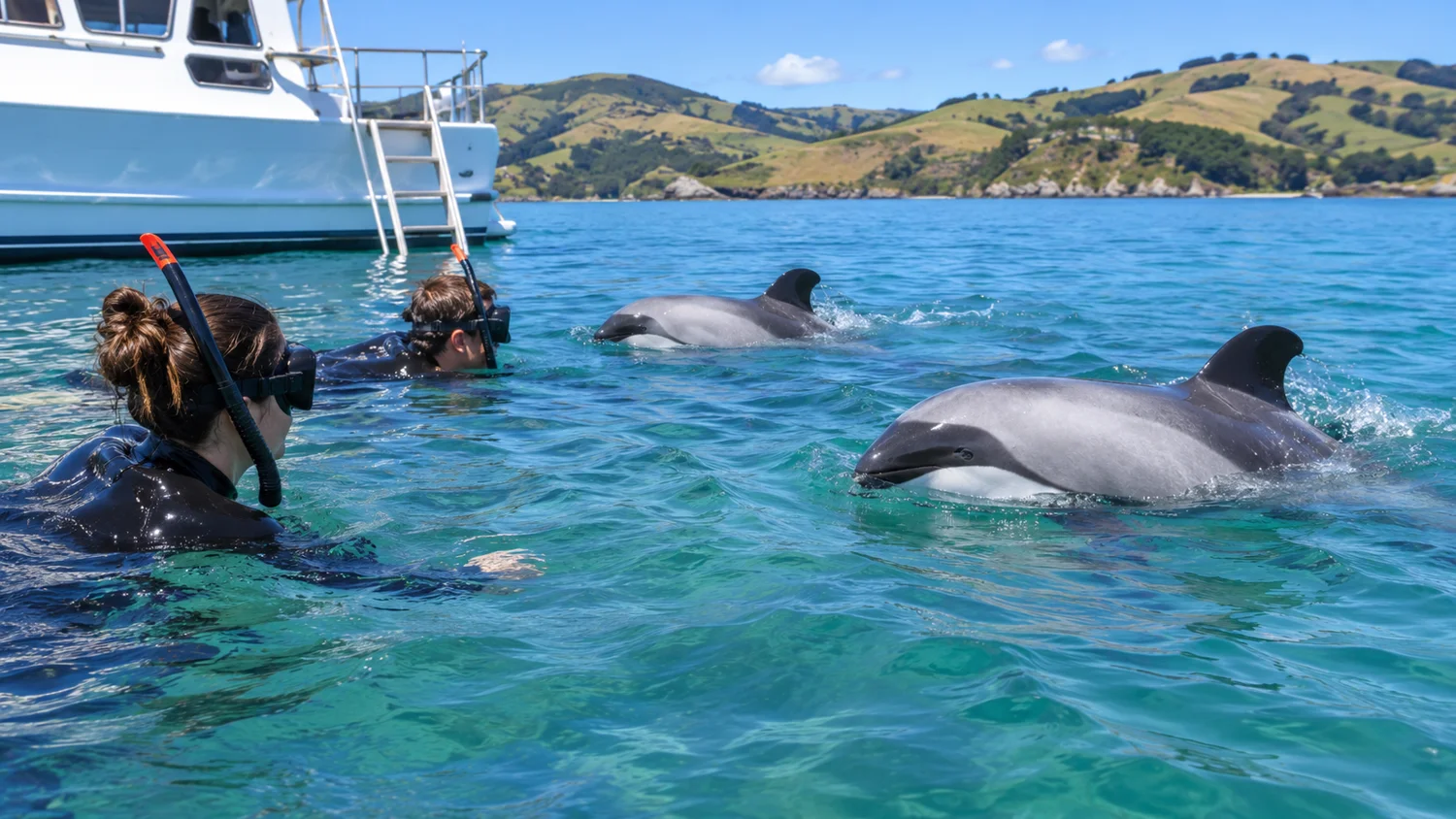
Look for the fin: it is black, low and rounded, often compared to a Mickey Mouse ear, where most dolphins have a hooked, pointed fin.
The body is pale grey with a dark face, dark flippers and a white belly. Adults are about 1.5 metres long, so they look tiny next to a boat. Bottlenose and common dolphins are much bigger and have tall, curved fins.
Want to see that fin up close? The Akaroa Dolphins cruise sees Hector's dolphins on most trips, all year.
Check dates for the Akaroa Dolphins cruiseAre Hector's dolphins the smallest dolphins in the world?
They are among the very smallest. DOC's species page says "one of the world's smallest dolphins"; its marine reserve page goes further and says "the world's smallest dolphin".
You will also see "the world's rarest dolphin" in operator marketing. DOC does not make that claim, and the rarer form is the Māui dolphin. We stick with DOC's wording.
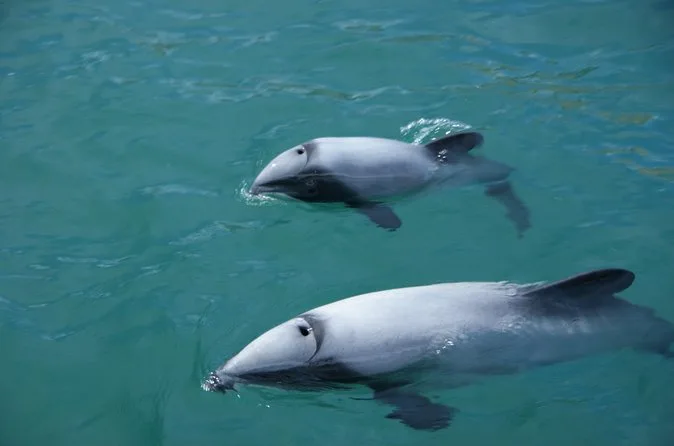
How many Hector's dolphins are left?
About 15,000 individuals older than one year, according to DOC.
DOC repeated the figure in its September 2026 release. DOC does not publish a separate count for Banks Peninsula. Any website that gives you one is guessing.
How are Hector's dolphins protected around Akaroa?
By three layers: a marine mammal sanctuary since 1988, a no-take marine reserve since 2014, and DOC limits on how many tour boats go out.
| Year | Protection | What it does |
|---|---|---|
| 1988 | Banks Peninsula Marine Mammal Sanctuary | New Zealand's first; set up to stop set-net bycatch. Expanded in 2020 to about 14,310 km2 |
| 2014 | Akaroa Marine Reserve | About 512 ha at the harbour mouth; nothing may be taken |
| 2025 | DOC trip caps | 20 dolphin trips a day across operators in peak summer, 12 a day for six months |
| 2026 | Ten-year moratorium | No new marine mammal tourism permits around all of Banks Peninsula |
Every Akaroa cruise operator works under a DOC permit. Akaroa Dolphins runs all year.
Check dates for the Akaroa Dolphins cruiseWhere and when can you see Hector's dolphins in Akaroa?
In Akaroa Harbour all year, most easily from a two-hour nature cruise to the heads.
DOC calls the Akaroa Marine Reserve a Hector's dolphin hotspot, and the cruises turn there. Black Cat says there are "no statistics to show that time of day increases viewing or swim success rates", so pick the time that suits you. Compare the boats in Akaroa dolphin cruises compared.
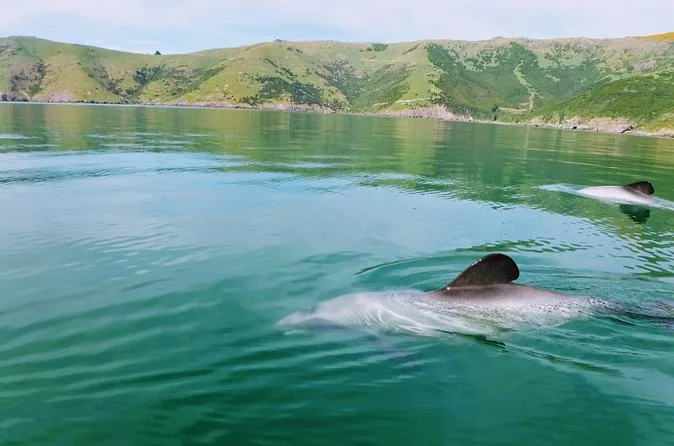
How do you watch dolphins without disturbing them?
Keep your speed down, let them come to you, and never feed or chase them. DOC's rules apply to kayaks and private boats too.
- Do not go faster than 10 knots until you are more than 300 m away.
- Approach parallel and slightly to the rear; never cut through a group.
- No more than three vessels within 300 m.
- Do not swim with pods that include juveniles, meaning animals half adult size or smaller.
- Do not feed them or throw anything near them.
The full list is on DOC's sharing our coasts page.
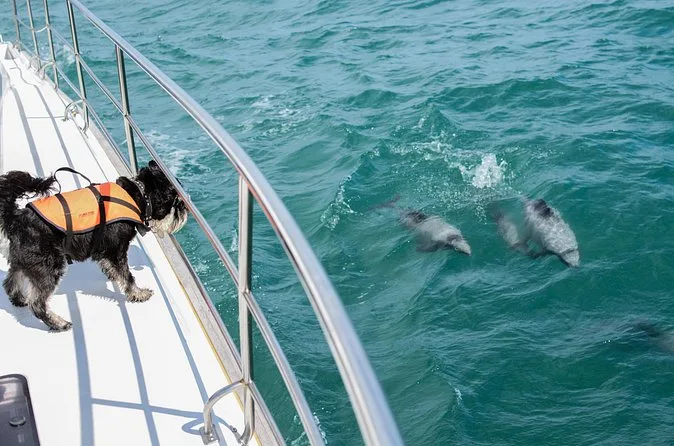
Want to watch rather than swim? This family boat keeps its distance and lets the dolphins approach.
Explore the Akaroa Dolphins cruiseShould you swim with them or watch from a boat?
Watch from a boat if the dolphins' welfare comes first for you; swim if you accept the operator's rules and the chance of no swim at all.
Akaroa Dolphins refuses to swim for conservation reasons. Black Cat swims "on their terms", with no sonar and no chasing. Both are legal under DOC permits. The swim season, rules and refunds are in swimming with dolphins in Akaroa.
Frequently asked questions
Where do Hector's dolphins live?
Only in New Zealand, mainly in coastal waters around the South Island, with some sightings around the North Island. Akaroa Harbour is one of the easiest places to see them.
Are Hector's dolphins the same as Māui dolphins?
Māui dolphins are a subspecies of Hector's dolphin. DOC says they look the same; Māui live off the North Island's west coast.
Can you see Hector's dolphins in winter?
Yes. Both Akaroa nature cruises run all year and see Hector's dolphins on most trips.
Is it legal to swim with Hector's dolphins?
Yes, with a permitted operator, but DOC rules ban swimming with pods that include juveniles.
Ready to book
Choose your trip
Every option here can be cancelled for a full refund; the deadline is on each listing. Prices are from-prices in USD and move with the season.
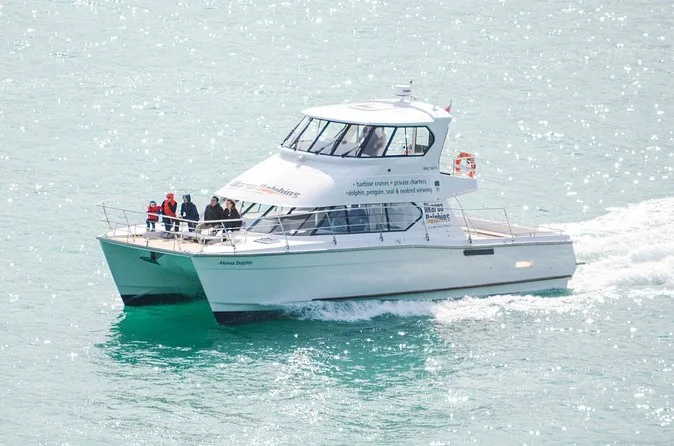
Akaroa Dolphins Harbour Nature Cruise
- Two-hour cruise to the sea cliffs and the Akaroa Marine Reserve
- Local skipper and guide with live commentary
- A drink (beer, NZ wine or soft drink) and a homemade cookie
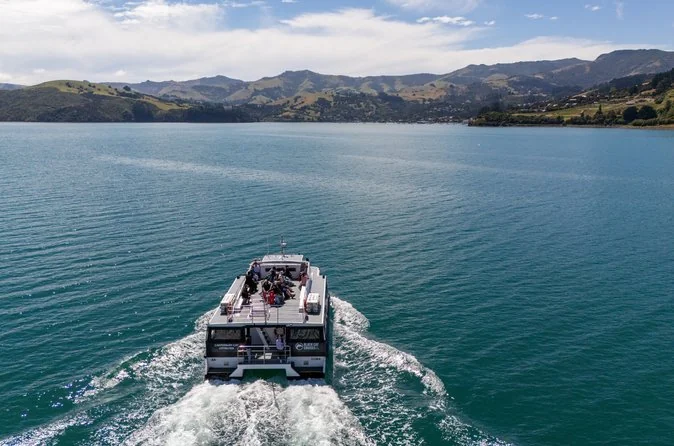
Black Cat Akaroa Harbour Nature Cruise
- Two-hour nature cruise with full commentary
- Tea, coffee or hot chocolate, and a postcard
- Fur seals, seabirds and, on most trips, Hector's dolphins
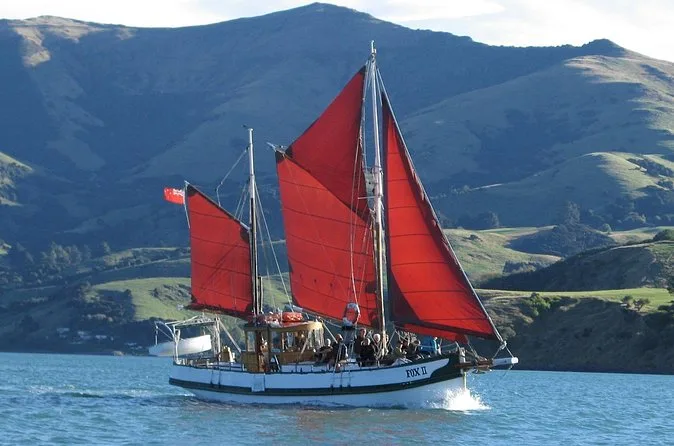
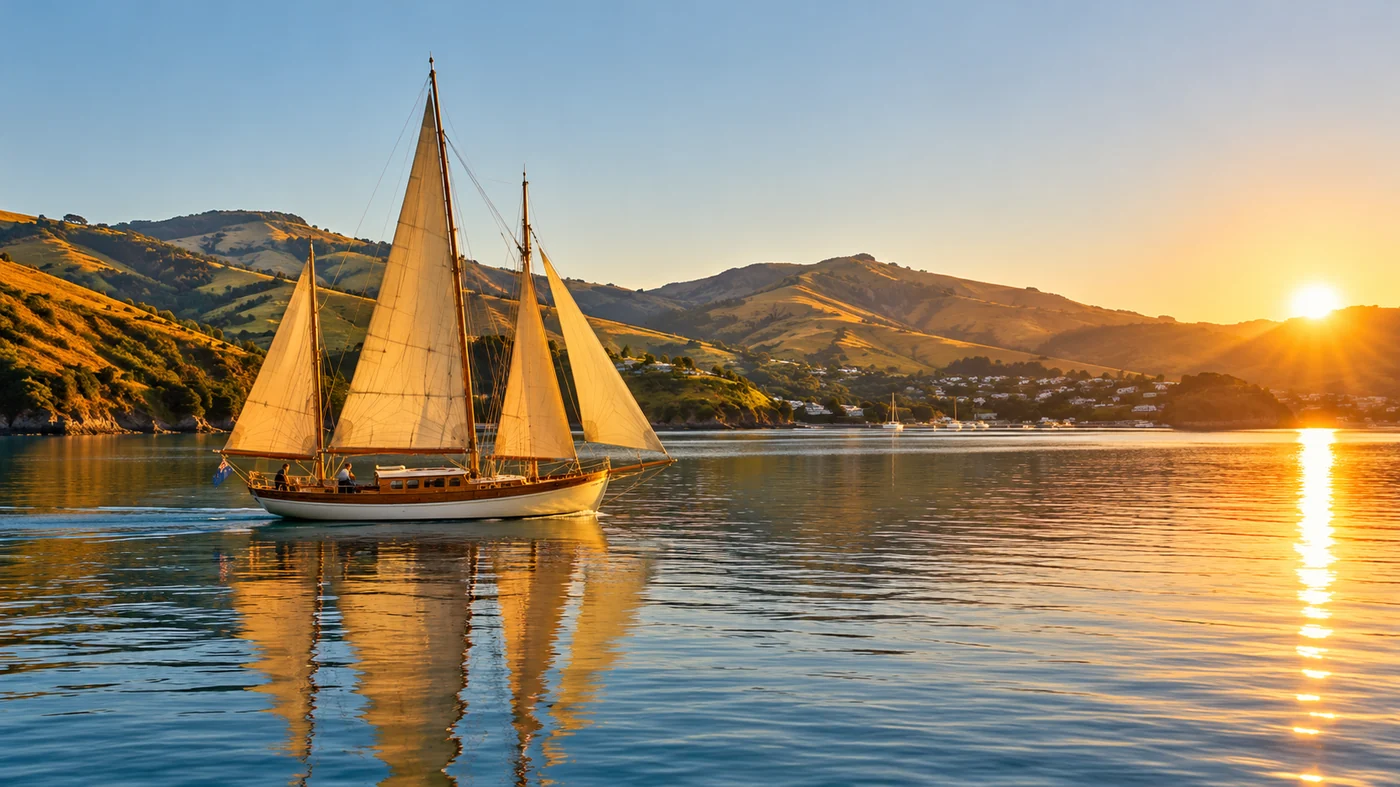
Fox II Sailing & Wildlife Tour
A classic yacht, dolphins and seals at a slower pace